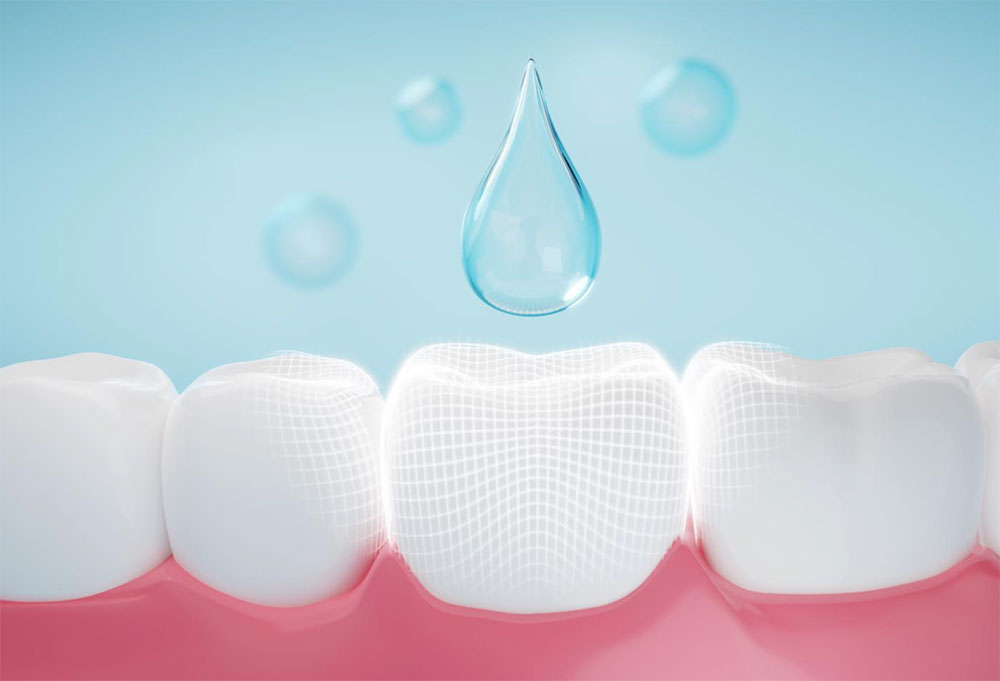
Silver diamine fluoride — commonly referred to as SDF — is a clear, colorless liquid that combines two powerful decay-fighting agents into a single, remarkably effective treatment. As its name suggests, it contains silver, which acts as an antimicrobial agent that kills the bacteria responsible for causing decay, and fluoride, which strengthens and remineralizes the tooth structure that decay has weakened. Together, these two components work in tandem to stop active cavities in their tracks and harden the affected tooth surface against further breakdown.
SDF represents a significant shift in the way dentistry can approach tooth decay — particularly for patients for whom traditional drilling and filling is difficult, impractical, or premature. It is applied in seconds, requires no anesthesia, no drilling, and no removal of tooth structure, making it one of the most minimally invasive treatments available in modern dentistry.
First developed in Japan decades ago and used widely in countries around the world, SDF received FDA clearance in the United States in 2014 and has since become an increasingly important tool in dental practices across the country — particularly in pediatric dentistry, geriatric care, and community dental health programs.
SDF is a versatile treatment with a growing range of applications. Its primary use is arresting — meaning stopping and stabilizing — active tooth decay. It can also play a meaningful role in prevention and sensitivity management.
Arresting Active Cavities
The most common and well-established use of SDF is stopping cavities that are already present from progressing further. When applied to an active area of decay, SDF penetrates the softened tooth structure, kills the bacteria driving the decay process, and triggers a hardening reaction that converts the soft, damaged tissue into a tough, decay-resistant surface. The cavity does not disappear — the damaged tooth structure is not restored to its original form — but its progression is halted, and the area becomes significantly more resistant to further breakdown.
This is a meaningful distinction from traditional cavity treatment, where the decayed tissue is removed and replaced with a filling material. With SDF, the goal is stabilization rather than restoration. In many cases, a filling or crown will still be placed over the treated area at a later date — but SDF buys time, manages the immediate problem, and in some situations may be the definitive long-term solution.
Specific conditions and populations SDF is particularly well suited for include:
- Young children with early childhood caries: Tooth decay in very young children — sometimes called baby bottle tooth decay — can be extensive and difficult to treat conventionally because young children are often unable to cooperate with drilling and filling procedures. SDF offers a way to stop the decay process quickly and comfortably without requiring the child to remain still for a lengthy restorative procedure.
- Children with dental anxiety: For children — and adults — whose fear of dental treatment makes traditional cavity treatment extremely difficult, SDF provides an effective alternative that is fast, painless, and non-threatening.
- Elderly patients: Older adults, particularly those living in care facilities or experiencing cognitive decline, often face significant barriers to traditional dental treatment. Root surface cavities are extremely common in this population due to dry mouth, medication side effects, and difficulty maintaining oral hygiene. SDF can be applied quickly and comfortably even in patients who cannot cooperate with conventional procedures.
- Patients with special healthcare needs: Individuals with physical, cognitive, or behavioral conditions that make sitting still for dental treatment challenging benefit greatly from the speed and simplicity of SDF application.
- Patients awaiting definitive treatment: When a cavity is identified but restorative treatment cannot happen immediately — due to scheduling, financial constraints, medical considerations, or other factors — SDF can be applied to stabilize the decay and prevent it from worsening while the patient awaits their next appointment.
- Multiple cavities requiring prioritization: Patients presenting with numerous active cavities may have all affected teeth treated with SDF in a single appointment to immediately arrest all active disease, with restorative treatment then planned and completed in a more organized and manageable sequence.
- Cavities in hard-to-restore locations: Decay in areas that are technically difficult to restore with conventional materials — such as cavities extending deep below the gumline or in areas of complex anatomy — may be treated with SDF as a primary or adjunctive approach.
Preventing New Cavities
In addition to treating existing decay, SDF can be applied to high-risk surfaces as a preventive measure — particularly on root surfaces in patients with gum recession, around the margins of existing crowns or fillings where new decay commonly begins, and on the teeth of patients at elevated risk due to dry mouth, diet, or other factors.
Reducing Tooth Sensitivity
The same mechanism that hardens and seals decayed tooth structure also has a beneficial effect on sensitive teeth. SDF can be applied to areas of exposed dentin — the softer layer beneath the enamel — to occlude the microscopic tubules that transmit sensitivity signals to the nerve. Patients with root sensitivity due to gum recession, enamel erosion, or naturally thin enamel often experience meaningful relief following SDF application.