Dental Services

Crowns and Bridges: What They Are and What to Expect

What Is a Dental Crown?

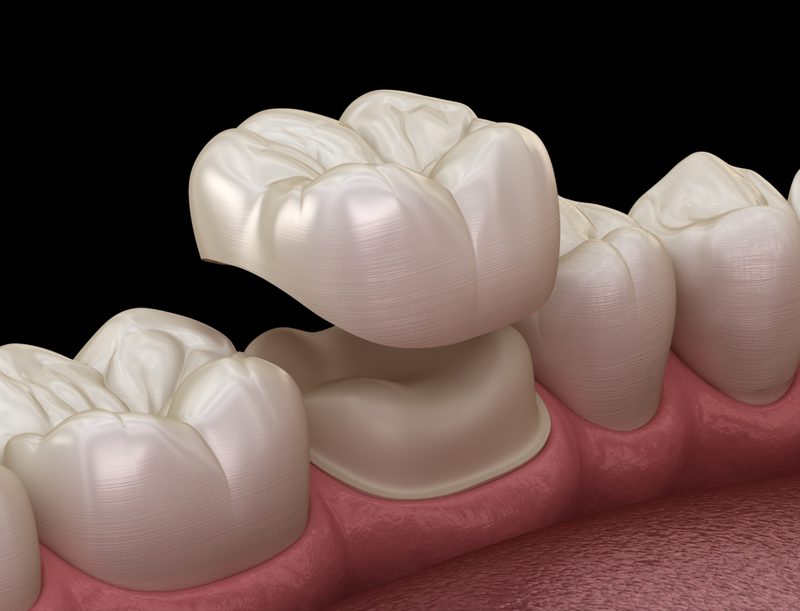
A dental crown is a custom-made cap that fits completely over a damaged or weakened tooth, restoring it to its original shape, size, and function. Crowns are recommended when a tooth has damage too extensive to be repaired with a filling alone.

Common reasons a crown may be needed:

  • Severely decayed teeth: When decay has destroyed too much of the tooth structure for a filling to hold.
  • Cracked or fractured teeth: A crown holds a cracked tooth together, preventing the crack from spreading and relieving pain.
  • Broken or worn-down teeth: Teeth broken from injury or ground down over time can be fully restored.
  • After a root canal: Teeth that have undergone root canal treatment are more brittle and vulnerable — a crown protects and strengthens them.
  • Large, failing fillings: When an old filling breaks down or the surrounding tooth structure weakens, a crown provides a more durable long-term solution.
  • Cosmetic improvement: Severely discolored, misshapen, or disproportionate teeth can be transformed with a crown for a natural, uniform appearance.
root-canal-crown
crown-and-bridges

What Is a Dental Bridge?

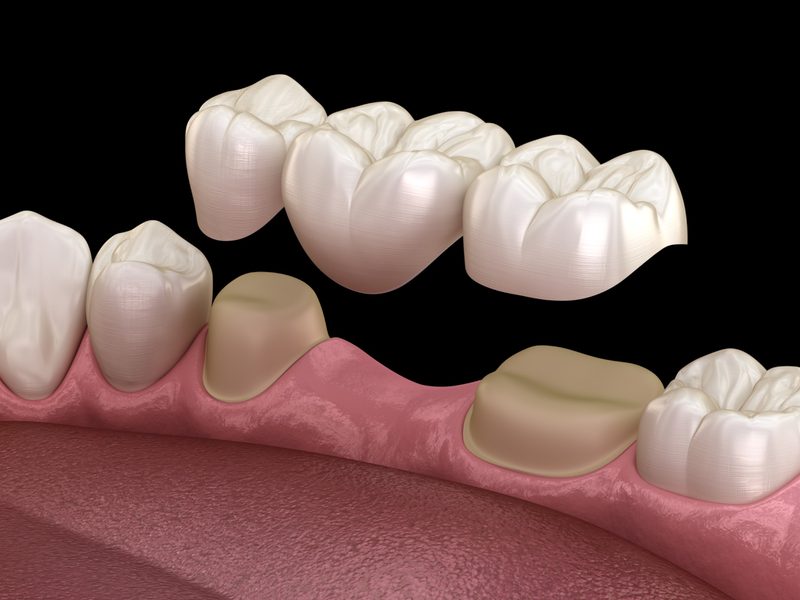
A dental bridge is used to replace one or more missing teeth. It consists of one or more artificial teeth (called pontics) anchored in place by crowns on the healthy teeth on either side of the gap. Bridges restore your ability to chew and speak normally, maintain the shape of your face, and prevent surrounding teeth from shifting out of position.

Common reasons a bridge may be needed:

  • One or more missing teeth due to decay, gum disease, or injury
  • Preventing bite problems caused by teeth drifting into the empty space
  • Restoring confidence in your smile and everyday function

How Are Crowns and Bridges Placed?

Both procedures follow a similar process and are typically completed over two appointments:

First Appointment

Preparation

1

Numbing the area

A local anesthetic is applied so you stay comfortable throughout.
2

Reshaping the tooth

For a crown, the tooth is gently reshaped on all sides to make room for the crown to fit over it. For a bridge, the two teeth on either side of the gap are prepared the same way.
3

Taking an impression

A precise mold of your teeth is taken — either with traditional putty or a digital scanner — and sent to a dental lab where your custom restoration is crafted. This process typically takes 1–2 weeks.
4

Placing a temporary crown or bridge

A temporary restoration is placed to protect your teeth and maintain appearance while you wait.
Second Appointment

Placement

1

Removing the temporary

The temporary restoration is carefully removed and the tooth is cleaned.
2

Fitting the permanent restoration

Your dentist checks the fit, shape, and color of the new crown or bridge, making any minor adjustments needed.
3

Cementing in place

Once everything looks and feels right, the restoration is permanently bonded to the tooth with dental cement.
4

Final adjustments

Your bite is checked and fine-tuned to make sure everything feels natural and comfortable.
What Can You Expect Afterward?

Some sensitivity and mild soreness around the treated area is normal for a few days. Your new crown or bridge may feel slightly different at first, but most patients adapt quickly. With proper brushing, flossing — including under the bridge — and regular dental visits, crowns and bridges can last 25 years or more.

As always, your dentist is happy to answer any questions and help you find the best solution for your smile.