Dental Services

Dental Implants: What They Are and What to Expect

What Is a Dental Implant?

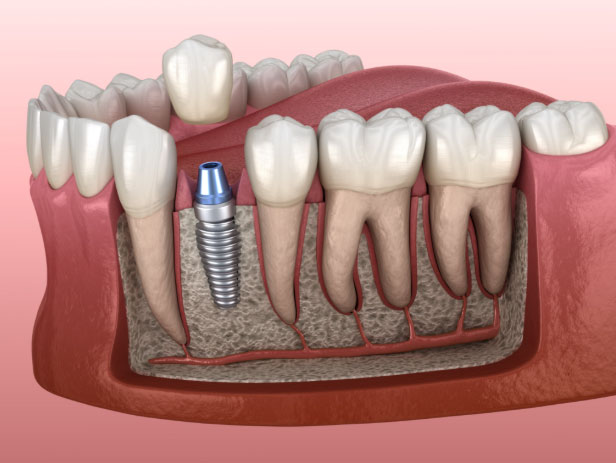
A dental implant is a long-term solution for replacing a missing tooth from the root up. Unlike a bridge, which relies on neighboring teeth for support, an implant stands entirely on its own. A small titanium post is surgically placed into the jawbone, acting as an artificial tooth root. Over time, it fuses with the bone to create a stable, permanent foundation for a natural-looking replacement tooth.

Implants are widely considered the gold standard for tooth replacement because they look, feel, and function just like natural teeth.

What Do Dental Implants Treat?

Implants are recommended in a variety of situations, including:

  • Single missing tooth: An implant with a crown on top replaces one tooth without affecting the healthy teeth around it.
  • Multiple missing teeth: Several implants can support a bridge or partial denture, eliminating the need to rely on neighboring teeth for anchoring.
  • Full arch replacement: Patients missing all or most of their teeth on the upper or lower jaw can often be treated with an implant-supported full arch restoration — sometimes called “All-on-4” — which provides a complete, fixed set of teeth anchored by just a few strategically placed implants.
  • Failing or loose dentures: Implants can be used to anchor an existing or new denture firmly in place, dramatically improving comfort, stability, and chewing ability.
  • Bone loss prevention: When a tooth is lost, the jawbone in that area begins to shrink over time. An implant stimulates the bone just like a natural root, helping to preserve your facial structure and prevent further bone loss.

dental implant restoration

How Is a Dental Implant Placed?

The implant process takes place over several months, allowing time for proper healing at each stage. Every patient’s timeline is different, but the general process looks like this:

1

Consultation and Planning

Your dentist or oral surgeon will take detailed X-rays or a 3D cone beam scan of your jaw to evaluate your bone density and determine the ideal placement. A personalized treatment plan is created based on your specific needs. A bone graft may be recommended first to build up enough support for the implant and allow for better integration.
2

Implant Placement (Surgical Appointment)

Under local anesthesia — and sedation if preferred — a small titanium post is gently inserted into the jawbone at the site of the missing tooth. The gum is then closed around it. Most patients are surprised by how manageable the procedure feels. Some mild soreness and swelling in the days following is normal and expected.
3

Osseointegration (Healing Period)

This is the most important phase of the process. Over the next 3 to 6 months, the implant gradually fuses with the surrounding jawbone in a process called osseointegration. This creates the strong, stable foundation that makes implants so durable. During this time, you will continue to go about your normal life — the healing happens quietly beneath the surface.
4

Abutment Placement

Once the implant has fully integrated with the bone, a small connector piece called an abutment is attached to the top of the implant post. This piece connects the implant to the final restoration. In some cases, the abutment can be placed at the same time as the implant.
5

Final Restoration

An impression or digital scan of your mouth is taken and sent to a dental lab, where your custom crown, bridge, or denture is crafted to match the color, size, and shape of your natural teeth. Once ready, the restoration is secured onto the abutment — completing your new tooth from root to tip.
What Can You Expect Afterward?

The area around the implant may be tender and slightly swollen for a few days after the surgical appointment. Over-the-counter pain relievers and a soft diet during the initial healing period are usually all that is needed for comfort. Full recovery is typically smooth, and most patients return to work within a day or two.

Once fully restored, dental implants require no special maintenance — simply brush and floss as you would with natural teeth and keep up with regular dental visits. With proper care, implants can last 25 years or more, with the majority lasting a lifetime.

Dental implants are an investment in your long-term oral health, comfort, and confidence. Your dental team will guide you through every step and make sure you feel informed and at ease throughout the entire process.