An orofacial pain specialist is a dentist who has completed advanced postgraduate training — typically a two to three year accredited residency program — specifically focused on the diagnosis and management of complex pain conditions affecting the face, jaw, mouth, head, and neck. Orofacial pain is one of the newest recognized dental specialties, having been formally acknowledged by the American Dental Association as an official dental specialty in 2020, reflecting the growing body of research and clinical expertise that distinguishes this field from general dental practice.
While general dentists are trained to recognize and manage many common conditions affecting the teeth and supporting structures, orofacial pain specialists possess a deeper and more specialized understanding of the complex interplay between the jaw joints, muscles, nerves, and central nervous system that underlies many of the most challenging and persistent pain conditions affecting the head and face. They are uniquely positioned at the intersection of dentistry and medicine — working collaboratively with neurologists, rheumatologists, sleep physicians, physical therapists, pain psychologists, and other specialists to provide comprehensive, evidence-based care for conditions that often do not fit neatly into a single medical or dental discipline.
Patients are referred to orofacial pain specialists by their general dentist, physician, neurologist, or other healthcare provider — or may seek care directly when they have been experiencing persistent facial pain, jaw problems, or headaches that have not been adequately explained or managed elsewhere.
The scope of orofacial pain specialty practice is broad, encompassing a wide range of conditions that share the common thread of causing pain or dysfunction in the face, jaw, mouth, head, or neck. These conditions are often complex, frequently overlap with one another, and may have been present for months or years before a patient reaches a specialist.
Temporomandibular Disorders
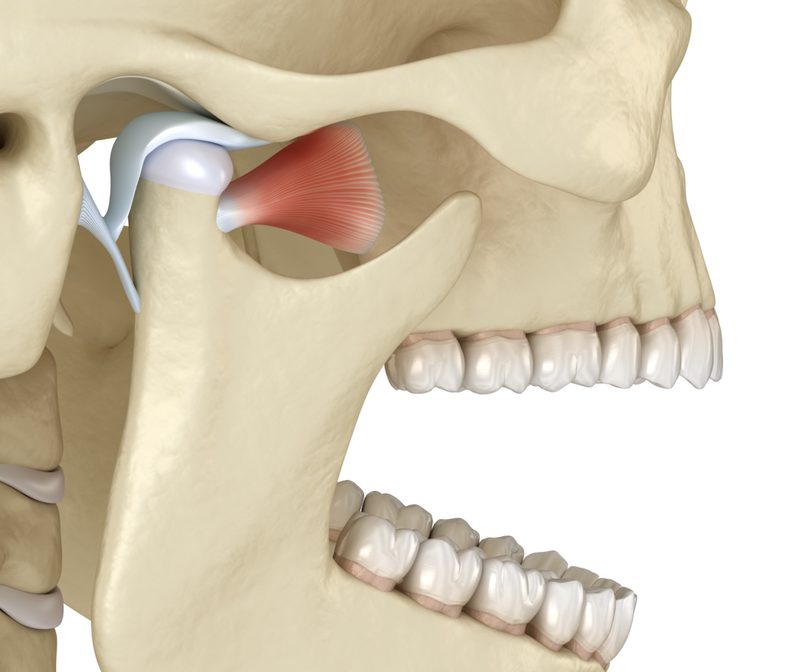
Temporomandibular disorders — commonly called TMD or sometimes loosely referred to as TMJ — represent the largest and most central category of conditions managed by orofacial pain specialists. TMD is not a single condition but rather an umbrella term encompassing a diverse group of disorders affecting the temporomandibular joints — the hinge joints on either side of the face that connect the lower jaw to the skull — the muscles of mastication — the powerful muscles responsible for jaw movement and chewing — and the associated structures including ligaments, tendons, and the articular disc within each joint.
TMD is remarkably common — affecting an estimated five to twelve percent of the general population — and is one of the most frequent causes of chronic facial pain and headache. It is more prevalent in women than men and most commonly presents between the ages of twenty and forty, though it can affect patients of any age.
TMD encompasses several distinct diagnostic categories:
- Myofascial pain: Pain arising from the muscles of mastication — the masseter, temporalis, medial and lateral pterygoid muscles — and the associated fascia. Myofascial pain is the most common form of TMD and presents as aching, tenderness, or fatigue in the jaw muscles, temples, or sides of the face. It is often associated with bruxism, stress, and postural factors, and may refer pain to distant sites including the teeth, ears, eyes, and neck.
- Temporomandibular joint arthralgia: Pain arising from within or around the joint itself, typically felt as tenderness directly in front of the ear that worsens with jaw movement. Arthralgia may be caused by inflammation of the joint capsule, strain of the surrounding ligaments, or other intra-articular pathology.
- Disc displacement disorders: The temporomandibular joint contains a fibrocartilaginous disc — a cushion-like structure — that normally sits between the head of the lower jaw and the skull base and moves smoothly with jaw opening and closing. In disc displacement disorders, this disc shifts out of its normal position — most commonly forward — and may cause clicking or popping sounds during jaw movement, restricted jaw opening, jaw locking, or pain. Disc displacement with reduction — in which the disc recaptures its normal position during opening, producing a click — is extremely common and often requires only conservative management. Disc displacement without reduction — in which the disc does not recapture and the jaw becomes mechanically restricted — may require more active intervention.
- Degenerative joint disease: Osteoarthritis of the temporomandibular joint — caused by the breakdown of the cartilage surfaces within the joint — can produce pain, crepitus — a grating or grinding sound during movement — reduced range of motion, and progressive changes in jaw structure and bite. It is more common in older patients and in those with a history of significant joint loading from bruxism or trauma.
- Inflammatory joint conditions: Conditions such as rheumatoid arthritis, psoriatic arthritis, and other systemic inflammatory diseases can affect the temporomandibular joints, causing significant pain, swelling, and in some cases progressive destruction of the joint structures. Management of TMD in the context of systemic inflammatory disease requires close collaboration with the patient’s rheumatologist.
- Hypermobility: Some patients have temporomandibular joints that move through an excessive range of motion — opening too widely — which can lead to instability, subluxation — partial dislocation — or frank dislocation of the joint, causing the jaw to lock in an open position.
Orofacial Muscle Pain Conditions
Beyond the masticatory muscles, orofacial pain specialists manage pain affecting a broader range of muscles of the head, face, and neck. Myofascial pain disorder — characterized by the presence of trigger points — hypersensitive, taut bands within muscle tissue that produce local and referred pain when compressed — is a central focus of this work. Trigger points in the masticatory and cervical muscles can refer pain to the teeth, sinuses, ears, and eyes in patterns that closely mimic toothache, sinusitis, ear infection, or other conditions, leading to extensive and often fruitless investigation before the true muscular source is identified.
Headache Disorders
The relationship between headache and orofacial pain is intimate and complex. Orofacial pain specialists are trained in the diagnosis and management of the major primary headache disorders — including migraine, tension-type headache, and cluster headache — as well as secondary headaches caused by TMD, cervical spine disorders, and other structural pathology. Because the trigeminal nerve — the primary sensory nerve of the face and one of the key drivers of many headache disorders — is central to both headache and orofacial pain, there is significant overlap between these two fields.
Many patients seen by orofacial pain specialists have headaches that have been attributed exclusively to migraine or tension-type headache when in fact a significant component of their headache burden is driven by TMD or myofascial pain — conditions that respond to very different treatment strategies than primary headache disorders. Accurate diagnosis in this population is enormously valuable and can lead to treatment approaches that provide relief that medication management alone has not achieved.
Neuropathic Pain Conditions
Neuropathic pain — pain arising from damage to or dysfunction of the nervous system itself rather than from tissue injury — represents one of the most challenging and complex areas of orofacial pain practice. Unlike the aching, throbbing, or pressure-like quality of musculoskeletal pain, neuropathic pain is characteristically described as burning, shooting, electric, or stabbing, and it may be accompanied by abnormal sensations such as numbness, tingling, or hypersensitivity of the affected area. Neuropathic orofacial pain conditions include:
- Trigeminal neuralgia: One of the most intensely painful conditions known to medicine. Trigeminal neuralgia — sometimes called the suicide disease in recognition of its devastating impact on quality of life — produces sudden, severe, electric shock-like pain in the face lasting from a fraction of a second to several seconds, triggered by innocuous stimuli such as light touch, eating, speaking, or a gentle breeze on the face. It most commonly affects one side of the face in the distribution of the trigeminal nerve — typically the cheek, jaw, teeth, gums, or lips. It is caused in the majority of cases by vascular compression of the trigeminal nerve root where it enters the brainstem.
- Persistent idiopathic facial pain: Formerly called atypical facial pain, this condition is characterized by persistent, poorly localized facial pain that does not conform to the distribution of any particular nerve and lacks the clear diagnostic features of other recognized orofacial pain conditions. It is a diagnosis of exclusion — made after other potential causes have been systematically ruled out — and is thought to involve central sensitization and alterations in pain processing.
- Burning mouth syndrome: A chronic condition characterized by a persistent burning, scalding, or tingling sensation — most commonly affecting the tongue, lips, and palate — in the absence of any visible clinical abnormality or identifiable local cause. It predominantly affects postmenopausal women and can be profoundly distressing. The etiology is complex and likely involves neuropathic changes, hormonal factors, and central sensitization.
- Post-traumatic trigeminal neuropathy: Damage to branches of the trigeminal nerve — from dental procedures, oral surgery, trauma, or infection — can result in persistent altered sensation or pain in the distribution of the affected nerve. Symptoms range from numbness and tingling to severe burning or shooting pain, and they can persist for months or years after the original injury.
- Herpes zoster and postherpetic neuralgia: Reactivation of the varicella-zoster virus — the virus responsible for chickenpox — in the trigeminal nerve distribution causes shingles affecting the face, which can be followed by postherpetic neuralgia — persistent, often severe neuropathic pain that continues long after the acute viral rash has resolved.
Sleep-Related Orofacial Pain and Movement Disorders
Orofacial pain specialists have specialized expertise in conditions that occur during sleep and affect the orofacial region, including:
- Sleep bruxism: As discussed in the context of occlusal guard therapy, sleep bruxism — the habitual grinding and clenching of teeth during sleep — is a sleep-related movement disorder that can cause significant tooth damage, muscle pain, headache, and TMD. Orofacial pain specialists are at the forefront of evidence-based bruxism management, offering a range of treatment options beyond occlusal guard therapy when indicated.
- Obstructive sleep apnea: Given the well-established relationship between sleep apnea and both bruxism and TMD, orofacial pain specialists are frequently involved in the oral appliance management of sleep apnea and work closely with sleep physicians in this context.
Oral Mucosal Pain Conditions
Some orofacial pain specialists also manage painful conditions affecting the soft tissues of the mouth, including recurrent aphthous ulcers — canker sores — oral lichen planus, mucositis, and other conditions that cause significant oral pain and discomfort.
Referred Pain and Complex Diagnostic Presentations
One of the most valuable roles of the orofacial pain specialist is unraveling complex and atypical pain presentations — cases in which the apparent source of the pain is not the true source. Pain in the orofacial region is particularly prone to referral — the phenomenon in which pain is perceived at a location distant from where it actually originates. Myofascial trigger points, TMD, cervical spine disorders, cardiac disease, and intracranial pathology can all refer pain to the teeth, jaw, and face in ways that mimic dental pain. Patients who have undergone extensive — and unnecessary — dental treatment for pain that was ultimately not of dental origin are unfortunately not uncommon in orofacial pain practice, and specialist evaluation can prevent further unnecessary intervention while directing care toward the true source of the problem.