
Dental Services

Composite Restorations

What Do Composite Restorations Treat?

Composite restorations — commonly called “tooth-colored” or “white” fillings — are used to repair teeth that have been damaged in a variety of ways, including:

  • Chipped or fractured teeth: Minor breaks or chips from an injury or accident can be rebuilt with composite to restore the tooth’s original shape.
  • Worn-down teeth: Teeth worn from grinding (bruxism) or acid erosion can be rebuilt to a healthy size and shape.
  • Gaps between teeth: Small spaces between front teeth (called diastemas) can be closed cosmetically.
  • Discoloration or staining: Teeth with stubborn stains or uneven color can be covered and improved in appearance.
  • Replacing old metal fillings: Some patients choose to replace silver amalgam fillings with composite for a more natural look.
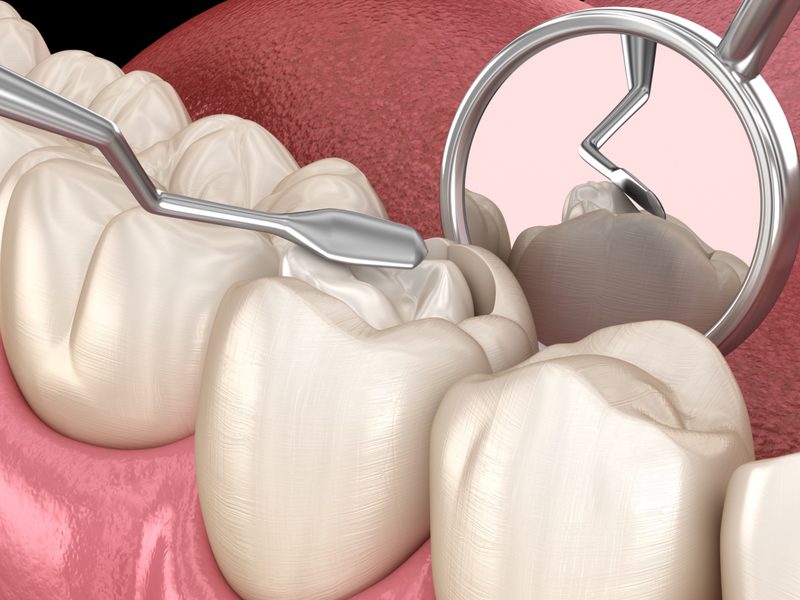
composite-restorations-procedure

How Is a Composite Restoration Placed?

The procedure is straightforward and typically completed in a single appointment:

1

Numbing the area

Your dentist will apply a local anesthetic to keep you comfortable throughout the procedure. Some procedures may not even require numbing.
2

Removing decay or damage

Any decayed or damaged tooth structure is gently removed, leaving a clean, healthy surface for bonding.
3

Preparing the tooth

The tooth surface is lightly conditioned with a mild solution that helps the composite material bond securely.
4

Placing the composite

The composite resin — a putty-like blend of plastic and fine glass particles — is applied in thin layers, each shaped carefully to match your tooth’s natural contours.
5

Curing with light

A special blue LED light is used to harden each layer of composite within seconds.
6

Shaping and polishing

Once fully set, your dentist refines the shape, checks your bite, and polishes the restoration to a smooth, natural-looking finish.
What Can You Expect Afterward?

Most patients return to normal activities immediately. You may notice mild sensitivity to temperature for a few days, which typically fades on its own.